


What Is Graphite Block
A graphite block is a solid shape of graphite, graphitized graphite electrode, or graphite powder isostatic pressing made from artificial graphite, and then machined into various graphite molds.
Why Choose Us?
Quality products: The company is committed to providing customers with high quality graphite raw materials and precision graphite products processing.
Rich experience: We have years of industry experience and a team of experienced engineers and technicians to ensure consistent precision and high quality of our products.
Reliable service: Our team is committed to providing reliable and consistent service, ensuring that you receive high-quality products and customer support from us every time.
One-stop solution: We are one of China's professional production, research and development, sales of graphite mold manufacturers.


Benefits of Graphite Blocks
● Graphite blocks are used to make capable, reliable products.
● Graphite blocks produce electrodes that exhibit high electrical conductivity properties as well as good refractory properties (for example, high thermal shock resistance and low thermal expansion).
● Graphite blocks exhibit high mechanical strength, high thermal conductivity, and high density.
● Graphite blocks are highly machinable.
● These materials are chemically stable and lightweight.
● Resistance to hot metals
In aluminum smelting systems, quality blocks are used for sidewalls and linings because they have a high solubility and are resistant to the presence of hot metal. Because the blocks have limited porosity and a lengthy life cycle, metal cannot permeate them.
● Thermal resistance
One of the main causes of block failures and problems with the lining and sidewalls of furnaces is thermal resistance, or heat. The life cycle is prolonged by exclusively employing premium carbon blocks, and the mix of fills, sealants, and manufacturing procedures for the blocks ensures continued usage even in the most demanding applications.
Types of Graphite Blocks
The different types of graphite blocks include:
Pyrolytic Graphite Block
A pyrolytic graphite block is of high purity. It is made by putting high-purity graphite parts into the furnace, adding nitrogen and methane under a vacuum at high temperatures, and then producing a coating in the graphite block. Pyrolytic graphite blocks have stronger resistance to oxidation than ordinary graphite blocks.
Amorphous Graphite Blocks
Amorphous graphite blocks are formed from amorphous graphite which is formed by contact metamorphism between a metamorphism agent and an anthracite coal seam. This type of graphite is microcrystalline graphite. This type of graphite has a higher content of ash than other types of graphite.
Flake Graphite Blocks
These blocks are formed from natural flake graphite which is made when carbon material is put under high pressures and temperatures. Flake graphite is usually found in metamorphic rocks.
Crystalline Vein Graphite Blocks
These types of graphite blocks are made from pyrolytic graphite which is suspected to be a naturally occurring pyrolytic. Crystalline vein graphite blocks are high quality with a graphitic content that ranges from 94 to 99%. The purest samples of this type of graphite come from the middle of the vein. The crystalline vein produces graphite blocks that are more electrically and thermally conductive than other types of natural graphite.
Synthetic Graphite Blocks
These types of blocks are made from synthetic graphite which is made from coke and pitch. Synthetic graphite has higher purity than natural graphite. There are two types of synthetic graphite. There are two types of synthetic graphite, electrographite and synthetic graphite.
How Graphite Blocks are Made
The graphite block is obtained by mixing graphite flakes of any size with graphene oxide sheets and subjecting the mixture to elevated temperature and pressure. With this method large graphite blocks can be obtained economically and fast.
There are many different types of processes used in the production of graphite blocks. The most commonly used methods are molding, extrusion, and isostatic pressing. The production process of graphite blocks follows many different stages. The first stage is crushing and grinding. The process begins with crushing and grinding. Next, the material is mixed and kneaded, followed by crushing and screening. The next stage includes pressing, roasting, and impregnation. In the final stages, the graphite undergoes graphitization, machining, and testing. At last, the final product is produced.
How to distinguish the quality of graphite block


In fact, many manufacturers have used graphite blocks for more than ten years and have not identified how to determine the quality of them. Some say it is particles and some say it is a formula. In fact, this is only a summary of products. There is only one key point to distinguish the quality of carbon graphite blocks, that is, density. The importance of density in the application of graphite block can be described from these aspects.
1. In the electroplating and electrolysis industries, many manufacturers only pay attention to the conductivity and price of graphite blocks, but sometimes ignore the important density, because if the density of the graphite block is small, pores are easy to appear on the surface, and penetration is easy to appear in the electrolyte, resulting in the oxidation and falling off of graphite sheets plates, resulting in greatly shortening service life.
2. In the anti-friction industry, graphite welding blocks are mainly used in the form of backing plates to play a lubricating role. Here, the density of graphite blocks is greatly shown. The physical structure of graphite blocks with small densities is not compact, which is easy to fall off in use and the surface consumption is too fast.
Graphite block has the following properties
(1) The melting point of high temperature resistant graphite is 3850±50℃, even after high temperature arc burning, weight loss is very small, thermal expansion coefficient is very small. The strength of graphite increases with the increase of temperature. At 2000℃, the strength of graphite is doubled.
(2) Electrical and thermal conductivity of graphite is one hundred times higher than the general non-metallic ore. The thermal conductivity is higher than steel, iron, lead and other metal materials. The thermal conductivity decreases with increasing temperature, and even at high temperatures, graphite becomes an adiabatic. Graphite conducts electricity because each carbon atom in graphite forms only three covalent bonds with other carbon atoms, and each carbon atom still retains one free electron to transport charge.
(3) The lubrication performance of lubricating graphite depends on the size of the graphite flake, the larger the flake, the smaller the friction coefficient, the better the lubrication performance.
(4) Chemical stability graphite at room temperature has good chemical stability, can resist acid, alkali and organic solvent corrosion.
(5) Plasticity of graphite toughness is good, can be rolled into a very thin sheet.
(6) Thermal shock resistance graphite at room temperature when used can withstand the dramatic change in temperature without destruction, temperature mutation, the volume of graphite change little, will not produce cracks.
Applications Of Graphite Blocks
Graphite blocks are an important carbon material known for their excellent electrical conductivity, high-temperature resistance, resistance to acids and alkalis, and ease of processing. Therefore, graphite blocks can be used in various industries:
Metallurgical Industry: Graphite blocks can be used to manufacture graphite crucibles, steel ingot protectants, and linings for metallurgical furnaces to improve smelting efficiency and product quality.
Electrical Industry: Graphite blocks can be used to make electrodes, brushes, carbon rods, and carbon tubes that conduct electricity and provide lubrication.
Chemical Industry: Graphite blocks can be used to create catalysts, filters, and seals to enhance the efficiency and safety of chemical reactions.
Mechanical Industry: Graphite blocks can be used to produce lubricants, seals, and friction materials to extend the life and performance of mechanical equipment.
Other Fields: Graphite blocks can also be used to make pencil leads, solar cells, sensors, and more, showcasing a broad range of applications.
Production Process of Graphite Blocks
The main raw materials of graphite block products are calcined high-quality petroleum coke. After crushing, screening, grinding and other processes, coal tar pitch is used as the adhesive. While heating up and removing volatile components, it is mixed in an all-round way to make it a paste with strong plasticity. The paste products are put into the mold and formed by vibration molding. During the forming process, the heating, pressurization and vacuum pumping are carried out at the same time, In order to ensure the uniformity and consistency of the internal and external quality of the product, after maintaining the static pressure in the mold for a certain time, the product can be separated from the mold and enter the next roasting process with the longest production time. The production cycle of graphite block is 90-115 days.
Graphite's most notable, and most unique property, has to be its incredible thermal properties. Not only does it conduct heat very well, but it also has impressive CTE values (coefficients of thermal expansion), and the material is very difficult to melt ~ yielding an intensely high melting point. In fact, technically speaking, graphite has no melting point until you get to approximately 100 atmospheres. And at the point, the melting point is between 3,600-4,200°K, which is approximately 6,000-7,000°F. This is roughly two thirds the temperature of our sun's photosphere. And much like carbon dioxide, the material goes directly from a solid state to a gaseous state. Therefore, carbon is certainly one of the go to materials when it comes to applications involving heat and heat transfers.
1. Melting Point
Due to the material's surprising melting point, graphite is frequently used to make crucibles, products that are molded, and specialty plates (or wall liners) for high temperature furnaces and fireproofing systems, rooms, lockers, safes, etc. Many consumer products that are molded can, and often do use graphite molds to manufacture them. However, before a product can be molded, a molten material is first required. This is where a crucible comes in to play. When metallurgists first melt down a material, graphite crucibles are typically used to melt it down and hold them, before they can be poured. Then when these molten materials are poured into a cavity (ingot molds, injection molds, blow molds, casting dies, etc.), graphite materials are often used for the actual molds as well. This is obviously due to graphite's natural resistance and immunity to extremely high temperatures. Carbon fibers are also used in flame retardant materials, including wearables, furniture, and other domestic products as well. While these products can and still do catch on fire, the carbon fibers that are interjected, blended, and woven into these materials often reduce the overall flammability, and they sometimes offer self-extinguishing characteristics too. Not only is carbon used in fire retardant materials, it is also used in fireproofing systems as well ~ in the form of graphite plates. These plates are often placed with the walls of rooms, lockers, and safes to protect them (and ultimately their contents) from fire.
2. High Thermal Conductivity
Graphite also possesses remarkable heat transfer properties. This is inevitably due to their impressive thermal conductivities. Many graphite materials have conductivities as high as 120-240 W/m°K (70-140 °F). The conductivity of some graphite composites are being measured as high as 1,000-2,000 W/m°K. Materials with a high thermal conductivity (materials such as these) are often used in applications where heat energy needs to be dissipated. Heat sinks, heat shields, and heat exchangers are prime examples here. Many are made of graphite and carbon composites. Sometimes carbon fibers are used in motherboards and circuit boards to dissipate heat away from the critical, heat sensitive components. These same materials are also being used in LED thermal management systems, and in the thermal cores of advanced avionics.
3. Low Coefficient of Thermal Expansion
Graphite is also unique due to its thermal expansion properties (CTE). Typically, when a material or substance is heated, it expands. However, graphite has a remarkably low coefficient of thermal expansion; which means that it can be heated and be exposed to extremely high temperatures without expanding all that much. This is very useful and very important when it comes to furnace components, molds that are used in the mold making industry, glass making tools, and even some epoxies and thermal pastes.
From the saw department, the synthetic graphite material is generally transferred to either the lathe or mill department. Here as well, our machines have various safety features built into them.
For lathes, safety features for machining graphite blocks include the following:
Foot Brake: All lathes have a foot-enabled brake at the bottom of the machine that cuts off the spindle motor mechanically and electronically.
E-Stop Button: The Emergency Stop Button stops the motor electronically, allowing the motor to coast to a stop. This is used in situations where the foot brake is not needed to stop the lathe instantly.
Chuck Guard: All our engine lathes feature a chuck guard that extends around the spindle nose. The chuck guard needs to be in the closed position to start the machine. If you’re running the machine and you lift the chuck guard, it functions like an E-Stop Button and shuts down the spindle.
Doors: All our enclosed lathes have doors present that have to be closed in order to begin the operation.
Many of the same features can be found on the milling machines. E-Stop Buttons are present on all machines, as are guards, doors etc.
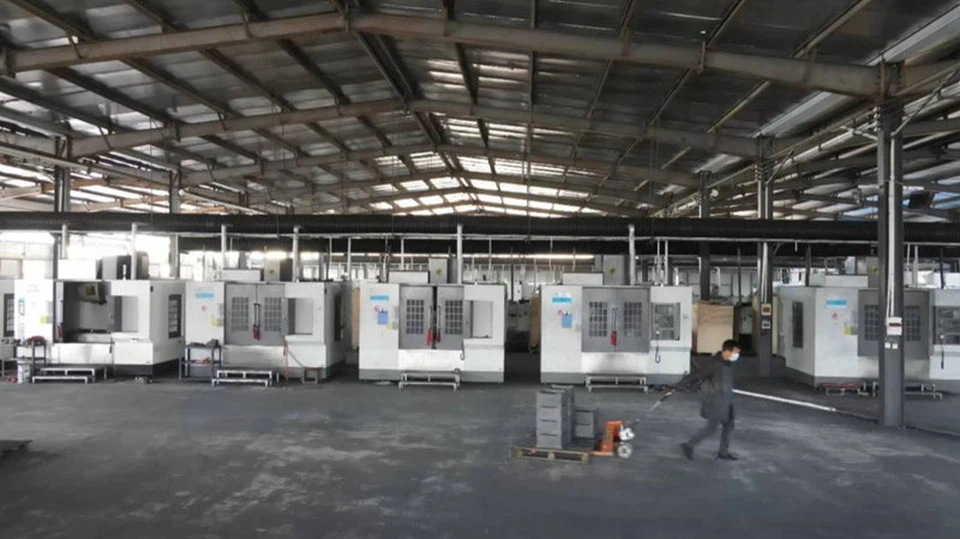
Our Factory
Henan Daking Import and Export Co., Ltd. (Henan Daking for short) is one of China's professional production, research and development, sales of graphite mold manufacturers. The company is committed to providing customers with high quality graphite raw materials and precision graphite products processing. The raw materials used by our company, such as isostatic pressed graphite, molded graphite and EDM graphite, have the characteristics of high strength, good thermal shock resistance, high temperature resistance, corrosion resistance and strong oxidation resistance.

FAQ
We're professional graphite block manufacturers and suppliers in China, specialized in providing high quality customized service. We warmly welcome you to buy high-grade graphite block made in China here from our factory.
Irregular Graphite Mold, Diamond Tool Graphite Mold, Isostatic Graphite Block