


What are Graphite Rods
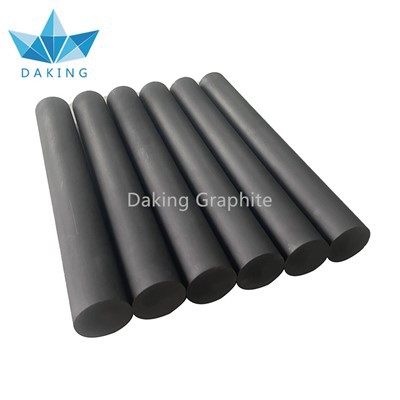
As a type of rod, graphite rods are produced from machined graphite or graphite compounds. They are well-known for their excellent thermal shock resistance, heat resistance, high corrosion resistance, non-reactivity, and ability to age well (because graphite is a non-fatiguing material).
Why Choose Us?
Quality products: The company is committed to providing customers with high quality graphite raw materials and precision graphite products processing.
Rich experience: We have years of industry experience and a team of experienced engineers and technicians to ensure consistent precision and high quality of our products.
Reliable service: Our team is committed to providing reliable and consistent service, ensuring that you receive high-quality products and customer support from us every time.
One-stop solution: We are one of China's professional production, research and development, sales of graphite mold manufacturers.




Benefits Of Graphite Rods
Excellent Thermal Shock Resistance: Graphite rods can withstand rapid temperature changes without cracking or breaking. This makes them ideal for applications where there are frequent temperature fluctuations.
Heat Resistance: Graphite rods have a high melting point and can withstand high temperatures. They are commonly used in high-temperature furnaces and heating elements.
High Corrosion Resistance: Graphite rods are resistant to most chemicals and acids. They can be used in corrosive environments without worrying about degradation or damage.
Non-Reactivity: Graphite rods are chemically inert and do not react with most substances. This makes them suitable for applications where chemical reactions could be detrimental.
Longevity: Graphite is a non-fatiguing material, meaning it does not degrade or weaken over time. This allows graphite rods to have a long lifespan and maintain their performance over extended periods.
Types of Graphite Rods
Graphite rods are machinable from graphite blocks for use in various industries and applications. Standard sizes are manufactured and machined from Extruded Graphite.
1. JC3 Fine-Grained Graphite Rods
JC3 is a dense fine-grained rod that can be machined and has a high temperature rating of 5432°F to 3000°C. Its grade is extruded graphite JC3 and apparent density is 1.72 to 1.74g/cc. Its characteristics enable strong electrical conductivity. JC3 graphite rods are machinable to extremely tight tolerances.
Graphite rods have good thermal conductivity because graphite is an excellent heat conductor and has a high thermal shock resistance. The rod compressive strength ranges from 11K to 38K lbs/in2. Corrosion resistant for all practical purposes and it is resistant to many acids, alkalis, solvents, and related compounds.
It has seal face flatness due to the high modulus of elasticity and stability to stay flat during operation at the rubbing faces. It also has non-galling features and built-in lubrication. The molecular structure of graphite generates an extremely thin covering on moving parts. Products will not seize or gall in the most severe applications. Graphite is porous but impregnates are utilized to fill these pores, which can range from high to completely impervious depending on the application.
JC3 graphite rods are mainly used in heat treating and electrochemical applications. They are also used to support beams or hearth rails to allow for thermal expansion. More uses include fixtures or support posts, stir sticks, electrodes, and other reaction purposes.
2. JC4 Fine-Grained Graphite Rods
JC4 is a sturdy fine-grained rod that is machinable and graded to a medium temperature (Heat Treating 1355°F to 735°C). Its grade is extruded graphite JC4 and its density is 1.76g/cc.
When higher temperatures are not necessary, its properties allow for good density and strength. The rest of its characteristics are similar to those of JC3 which have already been mentioned above. These rods are typically utilized in mechanical applications.
3. Superfine Molded Graphite Rod
Its characteristics are super fine grain size, high density, unreactive, superior strength, and molded graphite rod. It's suggested for high temperature metal, glass, and electrochemical applications including crucibles, stirring rods, molds, electrodes, anodes, bushings.
Diameter tolerances: +.010" / -.005". Superfine graphite is rated at a temperature of up to 2760 degrees Celsius. Particle size is 0.001in, Density is 1.8gr/cm, Compressive Strength is 13K psi, and Resistivity is 0.00050 ohm/inch.
4. Medium Grained Graphite Rods
The construction of these rods are ideal for roughing and finishing operations in various industrial applications. These rods are produced by use of an alternate manufacturing procedure which reduces cost over the isostatic molding procedure.
The label of medium grain graphite typically refers to materials with individual particles that range in size from 0.0508mm up to 1.575mm, which have been compression molded or extruded into their raw material form. 12 to 20% of a rod's volume is made up of pores between individual particles which are visible to the naked eye.
5. Coarse Grained Graphite Rods
There are several circumstances where coarse grain graphite rods are desired and satisfactory for an application. Usually when discussing a coarse grain graphite rod, it's an extruded graphite. The distinct particle size of this graphite material will vary from 1.016mm up to 6.096mm and have a large quantity of pores in the material.
This coarse grain material is a great material for the manufacture of graphite rods. Because of its big particle size and open pores the rods handle thermal shock extremely well and can handle changes in temperature as molten metals touch its surface. While these rods also have about 12 to 20% of its volume made up of pores between individual particles, these pores are quite visible to the naked eye because of the particles that make up the rods. These rods are mostly used as graphite electrodes for ladle furnaces and electric arcs in the steel industry.
6. Higher Density Graphite Rods
High density graphite is an exceptionally special material with high strength, high density, and a fine microstructure. It can be used for making rods because of its ability to handle exceedingly high temperatures while maintaining its shape and strength. Furthermore, these rods are low-cost and simple to machine in any form.
In the present day tech, graphite samples were produced from coal tar pitch based semi coke powders without the use of any supplementary binder. Isostatic graphite rods display greater features when compared to man-made graphite made from the old-style filler and binder procedure. This is then carbonized, pore filled, and graphitized.
7. Pyrolytic Carbon Coated Graphite Rods
A pyrolytic carbon layer on graphite reduces gas permeability, improves oxidation stability, and protects against particle release. It is created by means of a Chemical Vapor Deposition (CVD) procedure. Pyrolytic carbon coatings, like graphite, have exceptional thermal stability and chemical inertness. Furthermore, pyrolytic carbon can be utilized to penetrate and densify graphite, considerably reducing internal porosity.
Specifications Of Graphite Rods
|
Molecular Weight |
12.01 |
|
Tensile Strength |
18 MPa (Ultimate) |
|
Thermal Conductivity |
6.0 W/m-K |
|
Thermal Expansion |
4.9 µm/m-K |
|
Young's Modulus |
21 GPa |
Process of Graphite Rods
Compression molding, isostatic pressing, or rod extrusion are the three most common ways of producing graphite rods. Many of these techniques are comparable to those used to create graphite tubes.
1. Compression Molding
Compression molding is a forming process in which a substance is softened and then forced to take the shape of the mold in which it is resting. To begin, the material to be molded is preheated before being placed in an open, heated mold or hole. The mold is then closed from the top and pressured by a plug member as it softens. The graphite substance expands out and takes the shape of the mold due to the effects of pressure and heat. It's being kept here until it cures.
2. Mold Preheating
The mold first needs to be prepared with typical preparation steps including: cleaning the mold, applying a release agent, and heating done to induce the viscosity of the charge when it is finally loaded.
3. Charge Preparation
Compression molding is done on a variety of materials. Therefore, they come in many compositions, sizes, shapes, conditions, and packages. Preparation changes the material from its delivery state into one more suitable for compressing. Charge preparation includes: unpacking, cleaning, cutting, sizing, weighing, and heating.
4. Charge Loading
This entails placing the charge on the mold's lower portion. This way, the optimal compression result is ensured. The charge is then applied to the mold in the required pattern, depending on the form of the mold, required thickness, and other considerations.
5. Rod Compression
To put the two parts of the mold as close together as possible, relative motion is created. The charge is compressed as the parts move closer together. Compression can be used to accomplish forcing the charge to fill the entire planned volume in the mold's cavity. It also ensures the proper density of the product and facilitates curing.
6. Curing in the Molding Process
This stage of the molding process aids in the hardening of the compressed charge into the finished product. To enable setting and hardening, it may simply be necessary to lower the temperature or to use hardening agents and catalysts. Condensation type and addition type are some of the cure types.
7. Mold Cooling
Cooling ensures the mold has the perfect temperature for subsequent molding cycles. Ensuring the mold develops the preferred thermal and mechanical properties is important for the removal and usage or storage.
8. Graphite Ejection
Ejection is the release of the graphite after curing. Automated ejection often uses a plunger that moves from the mold's underside when ejection is needed, or a separate system of suckers. Ejection is frequently accompanied with a releasing agent and a coating put to the mold to prevent the product from clinging to the mold and to facilitate ejection.
9. Rod Extrusion
Rod extrusion simply engages in the standard extrusion molding process. This process begins with the collection of graphite stock and any needed additions in a hopper, where they are heated until molten. When the stock is
molten (or liquid), it is pressed through a tube-shaped die. After cooling, the stock takes on the size and shape of the die. It can be released from the die as a solid shape once it has cooled.
10. Hot Extrusion Process
This is a hot working technique, which means it is carried out above the graphite's recrystallization temperature. This prevents the graphite from solidifying and makes it easier to push through the die. The hot extrusion process is generally carried out on horizontal heavy hydraulic presses. Their pressures range between 30 and 700 MPa (4,400 - 101,500 psi). Thus, lubrication is required. For lower temperature extrusions, oil or graphite can be utilized, while glass powder can be used for higher temperature extrusions.
11. Isostatic Pressing
Isostatic pressing is a forming method that employs pressure from all sides. The graphite substance is placed within a high pressure containment vessel to work. An inert gas, such as argon, is used to pressurize the containment vessel. Once the graphite is within, the vessel is heated, raising the pressure and causing the graphite to form in this manner.
12. Hot Isostatic Pressing (HIP)
It is not only used for powder consolidation and two-step work of traditional powder metallurgy forming and sintering are completed simultaneously, but also for the elimination of casting defects, diffusion bonding of the workpiece, and the production of complex shape parts. In hot isostatic pressure, argon, ammonia, and other inert gasses are commonly employed as the pressure transfer medium, and the package of components is typically made of metal or glass. The operating temperature is often 1000 to 2200°C, and the working pressure is frequently 100 to 200MPa.
13. Cold Isostatic Pressing (CIP)
Cold isostatic pressing is advantageous for creating parts where the initial high cost of pressing dies cannot be justified, or extremely big or complex compacts are required. On a commercial scale, a wide range of powders, including metals, ceramics, polymers, and composites, can be pressed isostatically. Compacting pressures range from less than 5,000 psi to greater than 100,000 psi (34.5 - 690 MPa). In either a wet or dry bag process, powders are compacted in elastomeric molds.
What Is A Graphite Rod Used For In Smelting?
A graphite rod is used for various purposes in smelting, particularly in melting metals. It is commonly used to stir and mix molten metals to achieve a homogeneous mix of alloys in materials such as gold, silver, and brass. The graphite rod is typically used with a torch or in gas or electric melting furnaces.
In addition to its use in smelting, graphite rods are also utilized in high-temperature vacuum furnaces. In these furnaces, they serve as electric heaters that facilitate the oxidation of products at high temperatures, making it easier to produce the desired products. Graphite rods are popular in this application due to their high cost-performance ratio.
Graphite rods possess high thermal conductivity and electrical conductivity. Their thermal conductivity is higher than that of general metal materials like iron, lead, and steel, and it increases with temperature (though it decreases with temperature in some cases). The electrical conductivity of graphite rods is four times higher than that of stainless steel and twice as high as carbon steel.
In vacuum furnaces, graphite heating elements have become more popular than molybdenum elements for general heat-treating and brazing applications. The design of graphite heating elements has improved over the years, with lightweight, curved bands being commonly used. These elements are durable, easy to work with, and have surpassed molybdenum elements in popularity.
Graphite rods are also used in insulation and heat shield applications. They are selected based on their uniformity of red heat in the heating part, as any variation in heat uniformity can affect the furnace temperature and reduce the rod's lifespan. Additionally, the service temperature of the graphite rod affects its lifespan, with higher surface temperatures accelerating oxidation and shortening the rod's life.
Steps in Manufacturing the Graphite Rods


Cokes - Cokes is a component in oil refineries that is created by heating hard coal (600 to 1200°C). This procedure is carried out in a specifically built coke oven, which employs combustion gasses and has limited oxygen availability. Its calorific value is higher than that of traditional fossil coal.
Pulverizing - After the raw ingredients have been thoroughly inspected, they are pulverized to a specific grain size. Specific machines that grind the material transfer the resulting very fine coal dust into special bags, which are then sorted according to grain size.
Kneading - After the coke grinding process is finished, it is blended with pitch. At high temperatures, the raw materials are combined such that the coal melts and combines with the coke grains.
Second Pulverizing - Following the mixing process, little carbon balls form, which must then be ground into very fine grains.
Isostatic Pressing - The pressing stage begins once the fine grains of the necessary size are ready. The powder is then deposited in huge molds with sizes that correspond to the final block sizes. The powdered carbon in the molds is subjected to high pressure (above 150 MPa), which imparts equal pressure and force to the grains, resulting in symmetrical arrangement and even distribution. This process allows for identical graphite properties to be obtained across the whole mold.
Carbonizing - The next and most time-consuming stage (2 to 3 months) is baking in the furnace. Material that has been uniformly crushed is placed in enormous furnaces that reach temperatures of 1000°C. The temperature in the furnace is constantly maintained to avoid any faults or cracks. After baking, the block has reached the necessary hardness.
Pitch Impregnation - To reduce porosity, the block might be impregnated with pitch and burnt again at this step of the process. A pitch with a lower viscosity than the pitch used as a binder is typically used for impregnation. To fill any gaps more precisely, a low viscosity is required.
Graphitizing - At this point, the matrix of carbon atoms is now ordered, and the process of transitioning from carbon to graphite is known as graphitizing. Graphitizing is the process of heating the created blocks to around 3000°C. After graphitizing, the electrical conductivity, density, thermal conductivity, and corrosion resistance all improve dramatically, as does machining efficiency.
Graphite Material - It is critical to inspect all graphite parameters after graphitization including grain size, bending, density, and compression strength.
Machining - Once the material has been thoroughly prepared and examined, it can be manufactured into graphite rods.
Applications of Graphite Rods
Graphite rods are often utilized for fiber optics and semiconductor applications, both of which need precision and sensitivity. More popular uses of graphite rods are fishing rods and small fishing rods (since graphite is sensitive, durable, and lightweight).
Industrial applications include heat treating
They are used to support beams or hearth rails to enable thermal expansion because graphite can withstand extreme temperatures. Also as hot and melting metal stirring rods, graphite electrode cylinder rods. In electrolysis, graphite rods are used as well as the numerous delocalized electrons allow electricity to move through graphite swiftly.
Graphite rods can be used to extend a blown
In hole in a tube, as a flaring device, or to make an indentation in a glass sidewall. Graphite rods are applied as moderators in nuclear reactors to control the reaction rate. Graphite enables fission chain reaction by slowing neutrons in a graphite reactor. A few rods are inserted and absorb more neutrons that become available then the chain reaction accelerates. The level of power in the reactor starts to rise.
Machined graphite is commonly made of a composite or mixture of graphite and copper
Pure graphite with the additional copper yields its sought after properties of elevated strength and secured conductivity. As was alluded to, graphite rods are extremely resistant to heat. To define and quantify "extreme," it is to be noted that graphite rods can keep their form even when exposed to "extreme" temperatures such as 5000 degrees.
Graphite rods are commonly used as electrodes in electrolysis processes. Electrolysis is a technique that uses an electric current to drive a non-spontaneous chemical reaction. The electrodes, which conduct electricity to the electrolyte solution, play a crucial role in this process. Graphite rods are preferred for several reasons:
● Conductivity: Graphite is an excellent conductor of electricity. It allows the electric current to flow through the electrolyte, facilitating the movement of ions and the occurrence of electrolysis.
● Chemical Stability: Graphite is chemically stable and does not react with many substances. This is important because electrodes should not undergo chemical reactions that could interfere with the desired electrolysis process.
● High Melting Point: Graphite has a high melting point, which makes it suitable for use in high-temperature electrolysis processes.
● Mechanical Strength: Graphite is mechanically strong, providing durability and resistance to wear and tear during electrolysis.
● Availability: Graphite is readily available and relatively inexpensive, making it a practical choice for electrodes in various electrolysis applications.
Our Factory
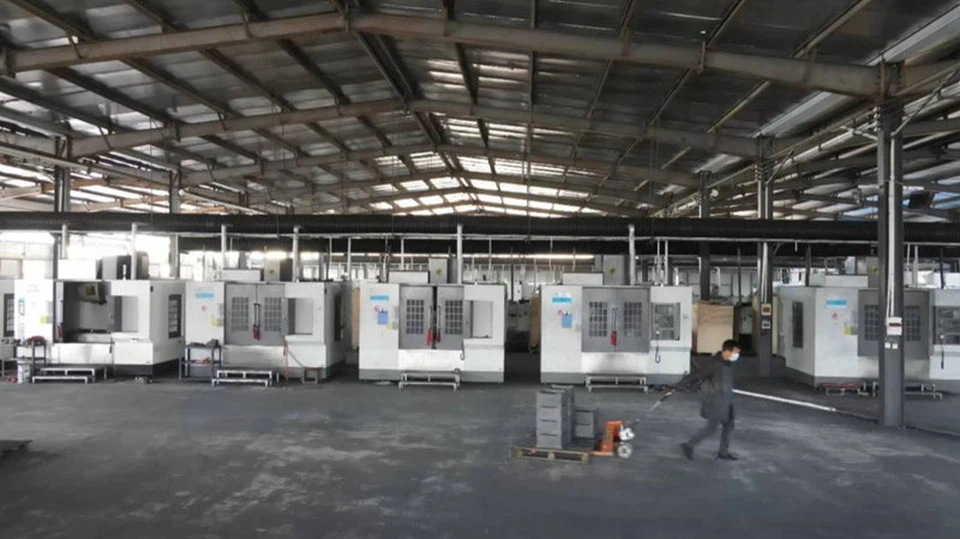
Henan Daking Import and Export Co., Ltd. (Henan Daking for short) is one of China's professional production, research and development, sales of graphite mold manufacturers. The company is committed to providing customers with high quality graphite raw materials and precision graphite products processing. The raw materials used by our company, such as isostatic pressed graphite, molded graphite and EDM graphite, have the characteristics of high strength, good thermal shock resistance, high temperature resistance, corrosion resistance and strong oxidation resistance.

FAQ
We're professional graphite rod manufacturers and suppliers in China, specialized in providing high quality customized service. We warmly welcome you to buy high-grade graphite rod made in China here from our factory.
Graphite Electrode Rod, Isostatic Graphite Rods, Graphite Rod