


What Is Graphite Crucible
A graphite crucible is a container used for melting and casting non-ferrous, non-iron, metals such as gold, silver, aluminum, and brass. The quality of a graphite crucible is determined by how it is manufactured, which influences its structure, density, porosity, and strength.
Why Choose Us?
Quality products: The company is committed to providing customers with high quality graphite raw materials and precision graphite products processing.
Rich experience: We have years of industry experience and a team of experienced engineers and technicians to ensure consistent precision and high quality of our products.
Reliable service: Our team is committed to providing reliable and consistent service, ensuring that you receive high-quality products and customer support from us every time.
One-stop solution: We are one of China's professional production, research and development, sales of graphite mold manufacturers.


Advantages of Graphite Crucibles
High Thermal Conductivity
Graphite crucibles have a high thermal conductivity, which reduces the time required for heating and cooling. Therefore, it saves the overall production time and reduces the cost of production.
01
Chemical Resistance
Graphite crucibles are highly resistant to most chemicals, including acids, bases, and other corrosive substances. It helps in ensuring the purity of the melted material and prevents contamination of the final product.
02
High Temperature Resistance
Graphite crucibles have a high temperature resistance due to their ability to withstand high melting points. It can withstand temperatures of up to 3500°C in a vacuum or inert atmosphere.
03
Durable and Long-Lasting
Graphite crucibles have a longer lifespan than other materials, which makes it a cost-effective choice for industrial applications. It has high strength and is resistant to cracks or deformation even at high temperatures.
04
Cost-Effective
Graphite crucibles are a cost-effective choice because they are reusable. It does not require frequent replacements, which saves cost and increases the efficiency of the crucible.
05
Applications of Graphite Crucibles
Graphite crucibles are widely used in various industries like:
Metallurgy
Graphite crucibles are used in the melting and casting of different metals and alloys like gold, silver, and copper. It is also used in the production of steel, iron, aluminum, and other metals that require high-temperature melting.
Chemical Industry
Graphite crucibles are used for chemical reactions that require high-temperature conditions like organic synthesis, polymerization, and pyrolysis processes.
Semiconductor Industry
Graphite crucibles are used in the production of semiconductors like silicon and germanium. It is used for growing single crystals of these semiconductors at high temperatures.
Arts and Crafts
Graphite crucibles are also used in the production of jewelry and sculptures. It allows the artist to melt metal and pour it into a mold to create a unique and one-of-a-kind piece.
How Graphite Crucibles Are Used

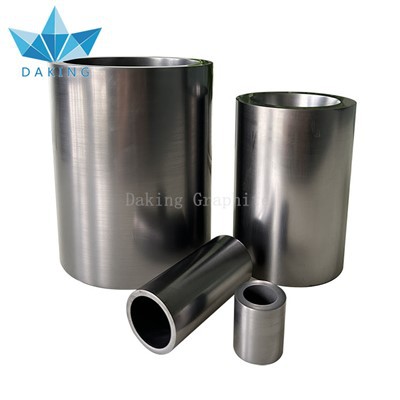


The non-reactive nature of graphite crucibles makes them ideal for use in the casting process. Their excellent heat performance helps in melting metals quickly for faster production cycles. Since graphite crucibles are resistant to chemicals and corrosion, they are not affected by workshop conditions, characteristics that make them durable and long lasting.
During casting, temperatures are increased to decrease the tensile and yield strength of the metals alloys being cast. The temperature at which metals melt varies depending on the type of metal. Factors that influence casting are the temperature of the alloy being cast and the temperature of the crucible. Graphite crucibles are exceptionally capable of providing the proper vessel for casting due to their high resistance to the effects of increases in temperature, regardless of the type of metal alloy.
The many hundreds of shapes of graphite crucibles are categorized by letters, which begin with A. Each form is divided into subcategories that are determined by the crucibles inside diameter (d or ID), outer diameter (D or OD), and height (H) and its shape. The crucible pictured below is cylindrical with a flat bottom and no spout or lid.
The different forms of graphite crucibles also refer to their shapes, which vary as widely as the different dimensional forms. They can be cylindrical with or without a spout, shaped like a cup, or include a top edge and lid, to name a few.
Graphite crucibles have slowly developed into an essential part of metal forming. They can be as small as teacups or large enough to hold several tons of molten metal and be permanent parts of furnaces.
Graphite crucibles are used in fuel fired, electric, and induction furnaces or as a method for transferring and moving molten metals. They have to be designed to fit the temperature, chemical, and physical requirements of the specific operation.
● Fuel Fired Furnace
A fuel fired furnace is powered by gas, oil, propane, or coke and requires a graphite crucible capable of withstanding the maximum amount of energy or BTUs from the furnace. Gas, oil, and propane-fueled furnaces use crucibles designed to withstand the burner flame around the tapered shape of the crucible, which allows for the even distribution of heat.
● Electric Resistance Furnace
Graphite crucibles for electric resistance furnaces must be specially designed since electric furnaces heat up much slower than fuel fired furnaces. Crucibles have to have a high graphite content in the carbon binder for energy savings and high thermal conductivity. They are basin shaped and are placed at equal distance from the heating elements.
● Induction Furnace
The selection for fuel fired and electric furnaces graphite crucibles is much easier than selecting one for an induction furnace. In one type of induction furnace, crucibles are used to melt the charge, while in other types, the inductive field passes through them. The crucible must match the operating frequency of the furnace and the specific application. In low frequency furnaces, the crucible is made with high silicon and carbide content. In high frequency furnaces, they are made of clay. Correct matching prevents overheating the crucible.
● Removable Crucible Furnaces
Furnace crucibles are "A" shaped so that they can be lifted with tongs to be removed from the furnace to pour out the molten metal. They can be charged inside or outside of the furnace and allow for pouring their contents.
● Tilting Furnace
A graphite crucible for a tilting furnace remains stationary as the furnace tilts to pour the molten metal. Tilting furnaces can be either induction or electrical and are capable of melting steel, iron, copper, brass, gold, platinum, silver, nickel, palladium, and their alloys.
● Pit Furnace
A pit furnace is located below ground level. The crucible is lowered into the furnace and has the metal to be melted placed in it. Coke is packed around the crucible in the heating chamber. Once the metal is melted, the crucible is lifted out.
The type of metal to be processed determines the type of crucible that will be required. The structure and design of the crucible must be able to support the maximum melting temperature of the metal and hold it. This is further determined by how the metal and the crucible interact, chemically and physically.
1. Copper
Copper based alloys that are melted in a fuel fired furnace are processed using a silicon carbide graphite crucible due for thermal shock resistance.
2. Aluminum
Crucibles for the processing of aluminum and aluminum alloys are carbon or ceramic bonded clay graphite and silicon carbide since these metals melt at 400°C or 750°F to 1600°C or 2912°F.
3. Gold
Graphite crucibles used for melting gold are made of a superior grade graphite and have thermal shock resistance, thermal stability, oxidation resistance, and excellent mechanical strength. They are designed to withstand temperatures of over 2000° C or 3632° F.
4. Silver
Graphite crucibles for melting silver are similar to those used to melt gold and capable of withstanding temperatures over 2000° C or 3632° F. The body of the crucible is made of natural graphite and keeps its chemical and physical properties. When melting at a high temperature, the thermal coefficient is small but has strain resistance to rapid heating or cooling.
5. Brass
Brass has a low melting point and must be heated rapidly before the component metals oxidize. For working with brass, a graphite crucible is ideal due to its durability and ability to heat up quickly.
Production of Synthetic Graphite

Powder Preparation
Prior to beginning production the raw materials are changed into a powder by crushers and ball mills. The powder is prepared in accordance with the required particle size distribution and blended into a paste using coal tar pitch or petroleum pitch as a binder.
Shape Forming
There are three methods for shape forming, which are extrusion, vibromolding, and isostitcal pressing.
● Extrusion: The extrusion method involves forcing the pasty mixture through a die to form rods, bars, plates, or tubes, which are cut to required lengths. Extruded graphite is isotropic, or uniform.
● Vibration: The vibration method includes pouring the pasty material into a mold, which is sealed with a metal plate. As the mold vibrates, the pasty material is compacted.
● Isostatic: Isostatic pressing involves applying pressure to the mixture by a liquid medium that surrounds the material. The flexible mold is submerged in the pressurized liquid for forming.

Baking
During the baking process, parts are heat treated at a temperatures between 900° C and 1200° C or 650° F and 2200° F, which results in thermal decompositioning of the binder into carbon and other components. The carbonization process binds the powder particles. Since the volume of the binder has higher volume than the carbon, pores are formed whose size is determined by the amount of binder.

Pitch Impregnation
The impregnation process is designed to reduce the porosity of the carbon parts and includes the use of material that is lower in viscosity than the original binder. The low viscosity allows the impregnated material to fill the gaps left by the removal of the binder.

Graphitization
Graphitization is another heating process where the parts are heat treated at extreme temperatures that range between 2700° C to 3000°C or 4900° F to 5450° F. The result of the process is the changing of the carbon in the part to crystalline graphite, which changes the physical properties of the material. A further outcome of the heating is the vaporization of impurities such as binder residue, gases, oxides, and sulfur.
The Manufacture of Graphite Crucibles
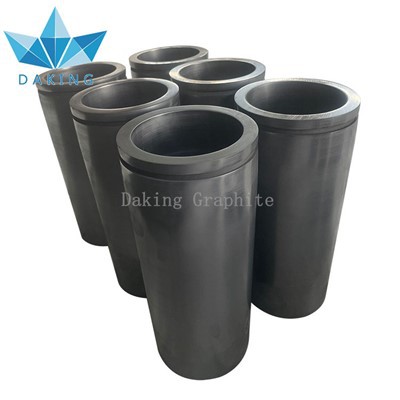
Methods for manufacturing graphite crucibles are vibration molding, isostatic pressing, and compression molding. The quality of a graphite crucible is determined by the method that is used to manufacture it, which determines its structure, density, porosity, and its mechanical strength.
Isostatic Pressing
The molding process forms graphite crucibles by isostatic pressure using powder metallurgy. Equal pressure is applied to the powder to uniformly compact it to the proper density and microstructure. The process can be performed cold or hot. Graphite crucibles formed by this method have excellent properties that are uniformly distributed throughout the entire mass without a grain direction, or are anisotropic.
The high density and small particle size of this type of crucible creates a very strong machinable graphite tool with resistance to high temperatures in controlled environments, electro-conductivity, and self lubricating properties.
Compression Molding
Compression molding follows the same principles as isostatic molding where a fine powder is placed under great pressure. To form the crucible, hydraulic pressure is applied to graphite powder in a steel mold. The advantages of compression molding are its simple process, short production cycle, high efficiency, low labor costs, less shrinkage, and high product quality.
Graphite crucibles produced by compression molding have a fine grain structure that can be used to replace more expensive isostatically pressed graphite crucibles. The limitation to the process is the restriction on the dimensions of the crucibles.
Vibration Molding
Vibration molding is used to produce large crucibles and includes the use of a pasty mixture of graphite. The pasty mixture is placed in the mold and a metal plate is placed over it. The mixture is compacted by vibrating the mold. After compacting, the molded crucible is baked for two or three months at temperatures close to 1000o C. In order to avoid cracks or defects, the temperature is precision controlled. At the end of the baking process, the crucible will have achieved its desired hardness.
Care of Graphite Crucibles
The handling and care of a graphite crucible determines how well it will perform and last. Though the failure of a crucible may seem to be related to its use, in many instances, it is from how the crucible is handled, operated, and maintained that determines its length of usefulness. Basic operational practices and procedures can prevent the early demise of a crucible.
1. Inspection
The first step in crucible handling begins when it arrives. Newly received crucibles should be inspected for chips, cracks, or abrasions.
2. Stacking
Stacking of crucibles inside each other leads to cracking and should be avoided.
3. Moisture
An enemy to graphite crucibles is moisture. They have to be stored in ventilated and dry areas to avoid any contact with moisture.
4. Thermal Shock
To avoid thermal shock to a crucible, it should be preheated especially if it is allowed to cool between uses. Thermal shock cracks the crucible if it is heated too quickly.
5. Charging
To properly charge a crucible, it should first be loaded with small charge materials and then loaded with larger ones. Materials to be processed should not be packed tightly since they will expand and crack the crucible.
6. Flux
Though crucibles are designed to resist chemicals, they can be damaged by flux, which should be added after the materials are fully molten. When flux is added and the worked material is solid, the flux attacks the surface of the crucible.
7. Direct Flame
Fuel fired furnaces have a direct flame burner that may have excess air. The excess air and direct flame causes oxidation damage to the surface of the crucible. Oxidation can also occur if the melted metal is held at a minimal temperature for an extended period of time.
8. Dross
Dross or slag buildup has a low thermal conductivity, which requires the furnace to burn hotter. The buildup absorbs flux that increases the chemical attack on the crucible‘s surface. This can be prevented by regular removal of dross.
9. Cleaning
Cleaning a crucible involves the removal of chemicals from processing, which involves the use of hydrochloric acid that dissolves most compounds except for carbon ones. To remove carbon compounds, nitric acid is used. Once the acids have done their work, they can be removed with potassium pyrosulfate, sodium carbonate, or borax to melt and remove cleaning agents.
10. Temperature Limit
Crucibles are designed to endure a specific temperature, which differs according to the type of material being worked. Exceeding the temperature limit can seriously damage or destroy the crucible. This is prevented by carefully monitoring the crucible during its use.
11. Preheating
Prior to using a crucible, it should be preheated at 500°F or 260°C for two hours and allowed to cool slowly. This process removes any residual moisture and prevents cracking.
12. Crucible Tongs
Tongs should match the shape and design of the crucible and should not place any pressure on the sides of the crucible.
Properties of Graphite Crucibles
The properties of graphite crucibles contribute to their exceptional performance:
Thermal Stability
Graphite crucibles can withstand temperatures ranging from 3,000 to 5,000 degrees Celsius without undergoing significant structural changes. This exceptional thermal stability ensures consistent performance even under extreme conditions.
Low Thermal Expansion
Graphite exhibits minimal thermal expansion, meaning it maintains its shape and integrity when exposed to rapid temperature changes. This property prevents cracking or warping of the crucible and enhances its longevity.
Oxidation Resistance
Graphite is highly resistant to oxidation, even at high temperatures. This characteristic prevents the crucible from reacting with oxygen in the air, ensuring the purity of the materials being processed.
Low Wettability
Graphite has low wettability, meaning molten metals do not readily adhere to its surface. This property facilitates easy removal of the solidified metal from the crucible, simplifying the casting and recycling processes.
How to Clean a Graphite Crucible
As high temperature vessels used in a variety of industries, it is important to keep graphite crucibles clean to ensure accurate and consistent results. Below is a step-by-step guide on how to clean a graphite crucible:
Allow the crucible to cool: Before attempting to clean the crucible, make sure it has cooled to a safe temperature. Handling a hot crucible may result in burns or other injuries.
Remove Any Large Debris: Using pliers or crucible tongs, carefully remove any large debris or residue from the crucible.
Scraping the Crucible: Using a brass or stainless steel scraper, gently scrape the inside of the crucible to remove any adhering residue. Be sure to touch gently to avoid damaging the crucible.
Cleaning the Crucible: After removing as much residue as possible, the crucible can be cleaned with a mild detergent and warm water. Gently scrub the inside of the crucible with a soft brush to remove any remaining debris.
Rinse and Dry Crucible: Rinse the crucible thoroughly with water to remove any soap or residue. Then, dry with a clean cloth or paper towel.
Choosing the Right Graphite Crucible
Selecting the appropriate graphite crucible involves considering the following factors:
1. Size and Capacity: Choose a crucible that suits the required volume of material to be processed.
2. Material Compatibility: Ensure the crucible material is compatible with the substances it will come into contact with during processing.
3. Application-Specific Design: Certain industries may require crucibles with specific shapes, such as conical or cylindrical, to optimize their operations.
Our Factory
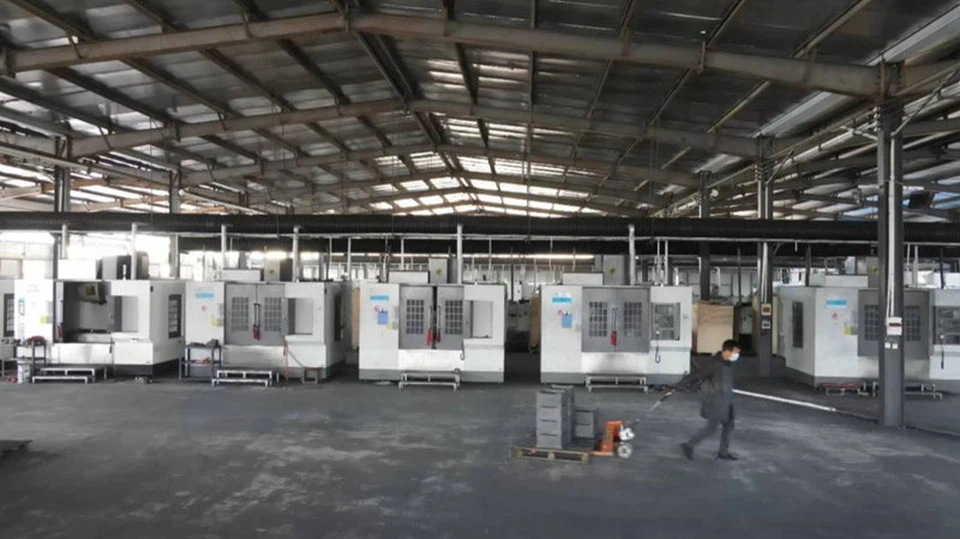
Henan Daking Import and Export Co., Ltd. (Henan Daking for short) is one of China's professional production, research and development, sales of graphite mold manufacturers. The company is committed to providing customers with high quality graphite raw materials and precision graphite products processing. The raw materials used by our company, such as isostatic pressed graphite, molded graphite and EDM graphite, have the characteristics of high strength, good thermal shock resistance, high temperature resistance, corrosion resistance and strong oxidation resistance.

FAQ
We're professional graphite crucible manufacturers and suppliers in China, specialized in providing high quality customized service. We warmly welcome you to buy high-grade graphite crucible made in China here from our factory.
Graphite Bushing Bearing, Square Graphite Crucible, Graphite Crucible for Melting Gold