


What Is Graphite Mold
Graphite has been used in mold production for over 50 years by large and small businesses alike. Advancements in available materials have created the options that allowed graphite to be used in a variety of applications. Ingot graphite molds are commonly used in aluminum, and precious metals (such as gold and silver) casting. Benefits of graphite molds are realized by combining the low cost associated with machining graphite and high strength common to graphite materials, providing an economical alternative to other molds in the zinc-aluminum metal casting industry.
Why Choose Us?
Quality products: The company is committed to providing customers with high quality graphite raw materials and precision graphite products processing.
Rich experience: We have years of industry experience and a team of experienced engineers and technicians to ensure consistent precision and high quality of our products.
Reliable service: Our team is committed to providing reliable and consistent service, ensuring that you receive high-quality products and customer support from us every time.
One-stop solution: We are one of China's professional production, research and development, sales of graphite mold manufacturers.
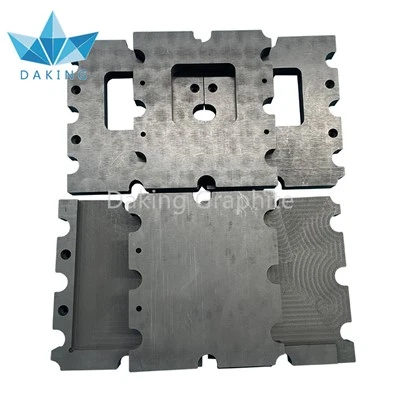

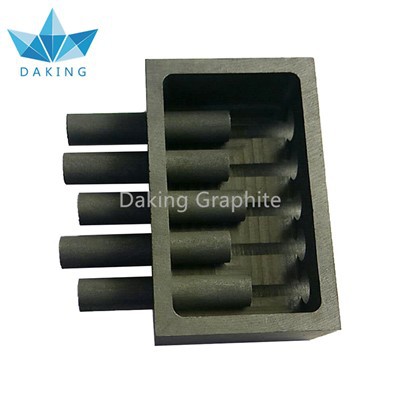


What Is Graphite Mold
Graphite is a widely used material in continuous casting. The die molds are generally produced out of graphite. In these types of applications, the types of graphite used are ISO-Molded types. Small porosities and good machinability are required properties, and ISO-molded graphite has those.
Benefits Of Graphite Molds
Time Saver
Companies that use graphite casting report considerable time savings, making the benefits of mold casting with graphite a major factor. A graphite mold can be manufactured weeks quicker than a die-casting mold, and a little over a month is the typical processing period from a completed CAD template to a manufacturing component.
Cost Efficient
The time saved by using graphite mold casting is significant. However, the cost savings are even more notable. A high-quality graphite mold costs just one-fifth of the volume of a die-cast mold. This is a substantial advantage.
Better Finished Product
The performance is top-notch. The graphite mold is designed to eliminate friction and reduce porosity. The temperature and cycle time are tightly controlled by a process controller. This results in more stable casting, shot to shot.
More Rewarding Compared To The Risks
A graphite casting company offers an impetus for creativity. It helps companies pursue innovative strategies, enable quicker changes, and fine-tune products with substantially lower financial risk. Small overheads mean more incentives. Effective performance results in increased savings.
Applications of Graphite Mold
Continuous casting and semi-continuous casting
The promotion of advanced manufacturing methods such as direct continuous (or semi-continuous) manufacturing of bars or pipes from molten metal has increased in recent years, both domestically and internationally. Continuous casting or semi-continuous casting molds for non-ferrous metals are made of artificial graphite, which is considered to be the most suitable material. As evidenced by production practice, the graphite mold not only improves the casting speed due to its high thermal conductivity (thermal conductivity is a property that determines the solidification speed of a metal or alloy) and good self-lubricating performance, but also allows for direct processing in the following process due to the ingot's accurate size, smooth surface, and uniform crystal structure. As a result, not only does the yield increase significantly, but the loss of waste products is reduced, and the product quality is significantly improved.
Pressure casting
It has been proven that artificial graphite can be used successfully in the pressure die casting of non-ferrous metals. Among other things, zinc alloy and copper alloy castings made with pressure casting molds made of artificial graphite materials have been used in automobile parts and other applications.
Centrifugal casting
Centrifugal casting has been successfully accomplished with the use of graphite molds. It has been decided in the United States to use an artificial graphite mold with a wall thickness greater than 25mm for centrifugal casting of the bronze casing. Certain anti-oxidation measures can be implemented in order to reduce the risk of artificial graphite mold catching on fire. In the event that it is discovered that the inner surface of the mold has been burned after casting a certain number of castings, the inner hole of the mold can be increased in size to allow for the casting of a large-size casing.
Glass forming
Because of the chemical stability of the stone graphite material, it is difficult to be infiltrated by the molten glass and will not alter the composition of the glass once it has been molten. The heat-resistant impact performance of graphite is excellent, and the material's size changes only slightly with temperature. In recent years, it has emerged as an essential mold material in the glass manufacturing industry, and it can be used to create molds for glass tubes, bends, funnels, and other custom-shaped glass bottles, among other applications.
Sintering
It is possible to manufacture the sintering mold and support for transistors by taking advantage of the characteristics of very small thermal deformation of artificial graphite material. It has a long history of use. It has evolved into a critical component in the advancement of the semiconductor industry. As well as molds for cast iron, graphite molds are also used in the production of wear-resistant molds for a wide range of non-ferrous metals, as well as molds for heat-resistant metals (such as titanium and zirconium). Thermit welding molds are also used in the production of rail welds.
Graphite Molds and Continuous Casting


Continuous casting is a casting method used in high volume production of metals with a constant cross-section. The method uses an open ended graphite die which is surrounded by a copper jacket. Through which is poured molten metal. The graphite mold is typically water cooled. This allows the molten metal to solidify within the die, the custom solid metal form is then extracted from the mold and pulled/passed through rollers and water sprays. This process removes the heat from the metal, and gradually solidifies it.
Graphite is a widely used material in continuous casting. The die molds are generally produced out of graphite. In these types of applications, the types of graphite used are ISO-Molded types. Small porosities and good machinability are required properties, and ISO-molded graphite has those. In rare instances, where large ingots are produced, extruded graphite is used. There are two types of continuous casting processes, a vertical casting and a horizontal casting. Graphite molds are used in both types of applications.
A wide variety of alloys are fabricated using continuous casting in graphite molds. Gray cast irons, copper-nickel alloys, nickel silvers, aluminum bronzes or gold and silver alloys, are just some of the alloys being produced with graphite molds.
The coefficient of thermal expansion is an important factor that determines why graphite is used as mold material. The casting mold is a medium with very un-uniform temperatures, from hot inside due to the molten material, to cold on the outside due to the cooling process applied to it. The low coefficient of thermal expansion that graphite exhibits, allows the mold to function without deforming or cracking.
Another very important factor is self-lubrication. Graphite is a solid lubricant that allows for low friction between the mold and the cast material. Subsequently graphite allows for smooth extraction of the casting.
There are various factors determining the lifetime of the mold. From the composition of the casted materials, to the casting temperature, to the cooling rates, all affect the life of the graphite mold. In general, graphite molds can operate continuously in excess of 100 hours. Also, graphite molds can be re-machined to smooth surfaces and used again.
The specific graphite grade used is also determined by a multitude of factors. The main factor is the composition of the alloy to be casted. For example, for a gray iron, or a high nickel alloy a graphite resistant to wear is required, while for brass a relative dense graphite with enough open porosity to allow zinc to evaporate, will be a better choice.
Designing graphite molds for continuous casting requires taking in consideration all these factors and applying them to your specific application. Grade selection is of the most importance, and should include input from foundry men, graphite manufacturers, and machine shops specialized in machining graphite. Even then, when designing a new system, actual trials could be needed, before an actual graphite grade is selected.
Graphite Mold Casting Process
Graphite mold casting process is a simple process where a plastic aggregate consisting of graphite grains, pitch, carbonaceous cement, starch and water are use for making the mold. The mixture is squeezed around pattern and allowed to set. When the mold dried, it is fired to dry to form a strong mold. The mold is then assembled by fixing the sprue, cores and gates in its.
The two halves of the mold are locked together and molten metal injected into it under low pressure. Some foundries feed the molten metal into the mold from the bottom, using semi-automated machines. The mold is held together throughout the solidification stage of the casting. The mold halves are separated to remove the cast and the process is repeated again. When pouring care must be taken to to keep a control on the fill rate, cycle time, and temperature.
Graphite is said to be ideal for mold making because of its overall stability that holds their shape when filled with molten metal. Because graphite do not corrode, it has infinite shelf life. Graphite is a metal that is cheaper than tool steel. It requires no heat treating and its exceptional machinability dramatically improves the mold making phase.
The Quality of Graphite Influences the Casting Process and the Quality of the Metal Produced
The ingot mold is an element that greatly affects the results of the precious metals casting process. The tunnel furnace is the safest and most efficient solution for the production of standards-compliant ingots, but it is necessary that this technology is supported by high quality consumables such as, for instance, graphite ingot molds.
Let's see, then, how the properties of high-quality graphite ingot molds are able to guarantee a professional casting process and ingots without any impurities:
Thermal Conductivity
The thermal conductivity of graphite is one of its most important features. Graphite with excellent thermal conductivity helps distribute heat evenly in the ingot mold during the melting process. This reduces the formation of hot or cold spots inside the ingot mold, thus ensuring a uniform melting of the metal. Uniform heat distribution prevents segregation of the molten metal and unwanted inclusions, thus contributing to the quality of the final product.
Thermal Stability
The thermal stability of high-quality graphite is essential to resist high temperatures during the casting process. If the graphite undergoes deformation or deterioration due to extreme heat, molten metal leakage or even contaminations may occur. High-quality graphite retains its shape and integrity even at extreme temperatures, ensuring that the casting process runs smoothly and without affecting the quality of the molten metal.
Chemical Reactivity
The low chemical reactivity of high-quality graphite is fundamental to prevent unwanted interactions between the graphite itself and the molten metal. Low quality graphite may chemically interact with the metal, introducing impurities and contaminations that would compromise the purity of the molten metal. High-quality graphite, with its low chemical reactivity, ensures that the molten metal keeps its desired properties intact.
Surface and Finishing
The quality of the inner surface of the ingot mold is also of crucial importance. A rough or porous surface could retain metal particles or residue, which may contaminate the subsequent molten metal. High-quality graphite is processed to achieve a smooth, well-finished surface inside the ingot mold, thus minimizing the risk of contamination.
Durability and Resistance
High-quality graphite is also more resistant to wear and erosion caused by high-temperature molten metal. Ingot molds made of poor-quality graphite may wear out more quickly over time, causing potential defects in the ingots produced. The durability of the ingot mold is crucial to maintain the repeatability and the quality of the melting process in the long run.
Density
The density of graphite, namely its mass per unit volume, plays a crucial role in the melting process. Ingot molds made of high-density graphite tend to retain heat better during the melting process, thus helping to maintain a uniform and stable temperature inside the ingot mold. This is essential to avoid unwanted fluctuations in the temperature of the molten metal, which may affect its quality and purity.
Cast Alloy Composition: Alloys containing elements that wet graphite (Fe, Ni, Zn, Sn) shorten mold life.
Liquidus-Solidus Interval of the Cast Alloy: A large liquidus-solidus temperature interval increases the contact time between the mold and the solidifying metal, enhancing wetting.
Graphite Density and Porosity: To achieve a longer service life for the molds and improve the casting surface quality, dense, low-porosity graphite grades are used for casting cast irons and alloys containing nickel, zinc, and tin.
Casting Temperature: Higher casting temperatures enhance wetting, resulting in a shorter mold life.
Cooling Rate: Fast cooling decreases the contact time between the mold and the solidifying metal, reducing wetting.
Absorption of Liquids and Gases by the Mold Material Prior to Casting: Liquids and gases absorbed by graphite may cause high pressure in the mold when the molten metal enters it. This pressure may break the mold. It is recommended to dry the mold before casting at 250-350°F (120-177°C) for 12-24 hours.

Graphite molds are created by pouring molten material, such as molten plastic, into a mold made of graphite. Once the molten material has cooled, the graphite mold is removed, leaving a replica of the desired object.
Sometimes, additional finishing, such as sanding, polishing, and painting, may be necessary. Graphite molds are also often used for die-casting, where molten metal is poured into the mold and then cooled, leaving behind a perfect replica of the desired shape.
Graphite after Use Molds Maintenance
Edge Grinding: After prolonged use, the mold's edges must be ground. After grinding, the cutting edge must be demagnetized to prevent magnetic blockage.
Spring and Elastic Parts: Springs and other elastic parts are most prone to damage, usually through fracture or deformation. When replacing springs, ensure that the specifications and models match, including the color, diameter, and length.
Punching Process: During use, punches can easily break, bend, or suffer from biting. Damaged punches and covers should be replaced with parts of the same specifications. Key parameters for punches include the working part size, installation part size, and overall length.
Fastening Parts: Check for any loose or damaged fastening parts. Replace them with parts of the same specifications if necessary.
Pressing Parts: Inspect pressing parts such as pressure plates, rubber, and unloading parts like strippers and pneumatic ejectors. Repair any damaged parts and check for any pneumatic leaks. Replace damaged trachea if needed.
Our Factory
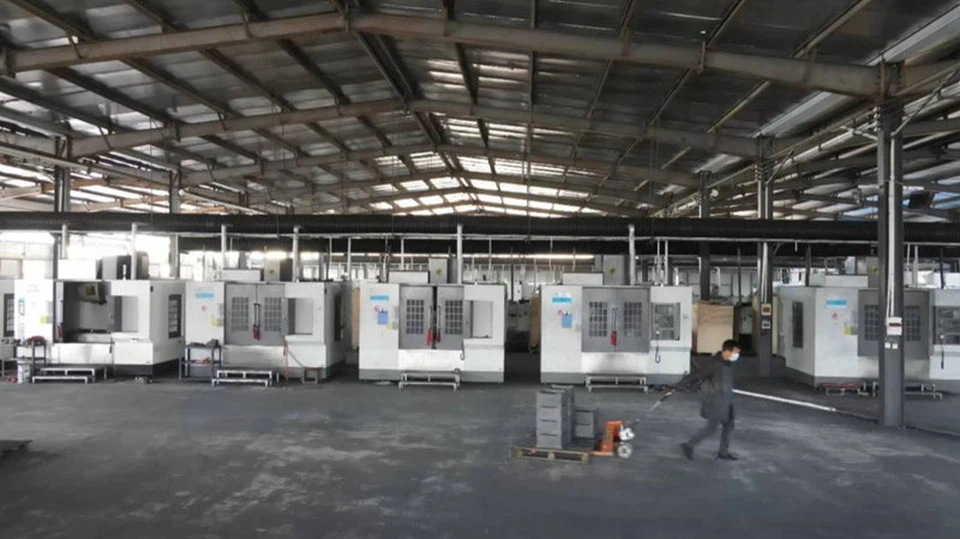
Henan Daking Import and Export Co., Ltd. (Henan Daking for short) is one of China's professional production, research and development, sales of graphite mold manufacturers. The company is committed to providing customers with high quality graphite raw materials and precision graphite products processing. The raw materials used by our company, such as isostatic pressed graphite, molded graphite and EDM graphite, have the characteristics of high strength, good thermal shock resistance, high temperature resistance, corrosion resistance and strong oxidation resistance.

FAQ
We're professional graphite mold manufacturers and suppliers in China, specialized in providing high quality customized service. We warmly welcome you to buy high-grade graphite mold made in China here from our factory.