


What Is Graphite Tube
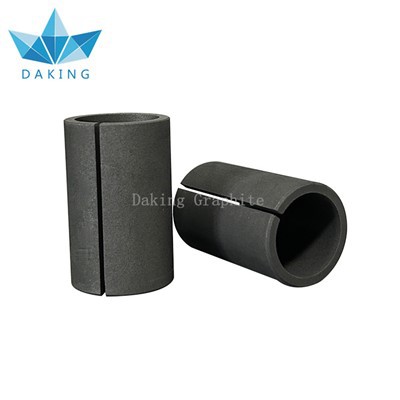
Graphite tubes are cylindrical structures made from graphite, a form of carbon. They are widely used in various industries due to their unique properties.
Graphite tubes are hollow cylindrical structures made from graphite, a material known for its excellent thermal and electrical conductivity, as well as its high temperature resistance. Graphite tubes are typically produced using either natural or synthetic graphite, depending on the specific requirements of the application. They are available in different sizes and dimensions to meet the diverse needs of various industries.
Why Choose Us?
Quality products: The company is committed to providing customers with high quality graphite raw materials and precision graphite products processing.
Rich experience: We have years of industry experience and a team of experienced engineers and technicians to ensure consistent precision and high quality of our products.
Reliable service: Our team is committed to providing reliable and consistent service, ensuring that you receive high-quality products and customer support from us every time.
One-stop solution: We are one of China's professional production, research and development, sales of graphite mold manufacturers.


Benefits of Graphite Tubes
Resistant to acids
Structural strength
Impact resistance
High volume utilization and high heat transfer effect
Long-lasting and easy to maintain
When heated from room temperature to 2,000 °C, graphite has the unusual virtue of becoming stronger. The internal tensions in the material affect this characteristic. The internal stresses that occur at room temperature decrease as process temperatures rise, increasing mechanical strength as a result. Increased mechanical robustness enables smaller designs and fewer fixture support systems, which leads to larger batch sizes.
Mechanical carbon-graphite grades are chemically inert, meaning they are unaffected by significant amounts of the majority of acids, alkalis, solvents, and other comparable compounds. As a result, parts and components created from this unique material are perfect for equipment used in food processing, chemical and fuel handling, as well as pumps, vanes, valves, and industrial processes where corrosion is a big issue.
Carbon has exceptional thermal shock resistance and is a good heat conductor. Becker carbon-graphite has the ability to "draw" heat produced by friction at seal faces and diffuse it. In applications requiring extremely high thermal conductivity, a graphitized or metal impregnated grade may be desirable.
Different impregnants are employed to fill the pores in mechanical carbon-graphite since it can be porous. Grades of graphite can range from extremely porous to completely impermeable. Some grades are challenging to process after impregnation, or shouldn't even be machined.
Applications of Graphite Tubes


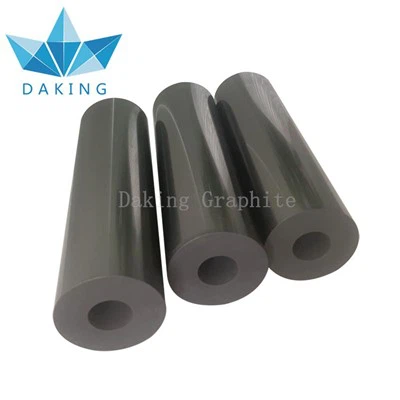

Heat Exchangers: Graphite tubes are extensively used in heat exchangers due to their exceptional thermal conductivity. They efficiently transfer heat between two fluids, making them ideal for applications in the chemical, petrochemical, and energy industries. Graphite tubes ensure efficient heat exchange while withstanding high temperatures and corrosive environments.
Semiconductor Industry: The semiconductor industry relies on graphite tubes for the production of silicon wafers. Graphite tubes serve as crucibles or molds for the melting and solidification of silicon during the manufacturing process. Their high purity, thermal stability, and non-reactive nature make them suitable for this critical application.
Furnaces and Kilns: Graphite tubes find application in high-temperature environments such as furnaces and kilns. They are used as heating elements or electrodes to provide heat and facilitate various industrial processes, including metal smelting, glass manufacturing, and ceramics production. Graphite tubes can withstand extreme temperatures while maintaining their structural integrity.
Analytical Instruments: Graphite tubes are utilized in analytical instruments such as atomic absorption spectrometers and atomic emission spectrometers. These instruments analyze the elemental composition of samples by vaporizing them using high temperatures. Graphite tubes act as sample holders and vaporization chambers, ensuring accurate and reliable analysis.
Manufacturing Methods of Graphite Tubes
Isostatic Pressing
Isostatic pressing is a common method used to produce graphite tubes. In this process, graphite powder is placed in a mold and subjected to high pressure from all directions using a hydraulic press. The pressure compacts the graphite particles, resulting in a dense and uniform structure. The molded graphite is then heat-treated to enhance its mechanical strength and remove any residual stresses.
Extrusion
Extrusion is another manufacturing method employed for graphite tube production. It involves forcing a graphite paste through a die to form a continuous cylindrical shape. The paste is typically a mixture of graphite powder and a binder that provides cohesion during the extrusion process. The extruded graphite tube is then cured to remove the binder and obtain the final product.
Chemical Vapor Deposition (CVD)
Chemical vapor deposition is a technique used for the production of high-quality graphite tubes. In this method, a substrate material, such as a ceramic rod or a graphite mandrel, is placed in a chamber. A precursor gas, such as methane or acetylene, is introduced into the chamber, and a chemical reaction is initiated to deposit carbon atoms onto the substrate surface. Layer by layer, the carbon atoms form a high-purity graphite structure, resulting in a graphite tube.
Graphite Tube Forming Process
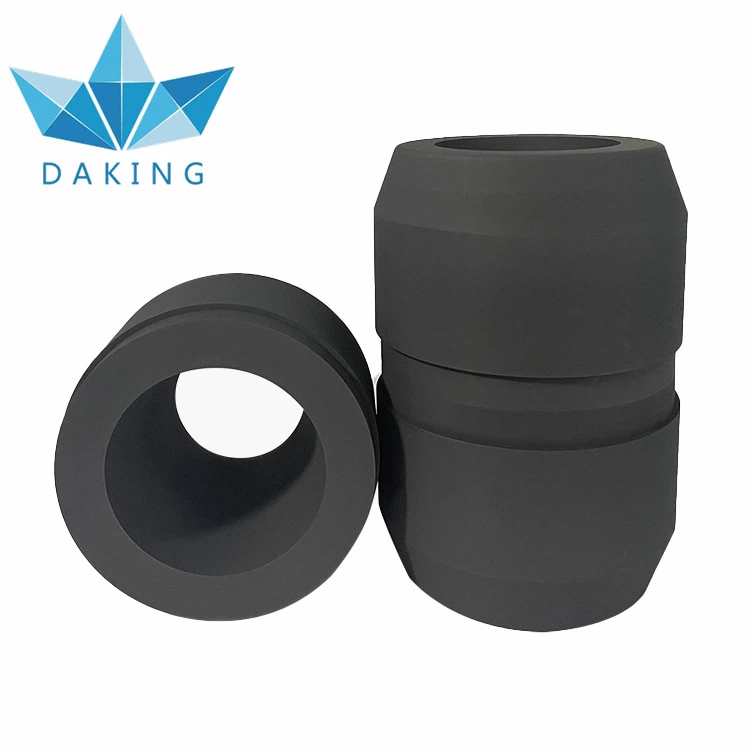
Graphite machining is used to create the tubes using processes such as extrusion, compression molding, or isostatic pressing. Each technique produces unique grades of graphite, useful for different purposes. Extruded or pressed graphite is often used in manufacturing operations. Graphite rods and plates that are isostatically crushed have substantially finer graphite particles and smoother surfaces. It's easy to specify custom different lengths, diameters, wall thicknesses, and flexibility for tubes. In contrast to metals, graphite gets stronger as the temperature rises and is less prone to degrade with time or normal wear and tear.
Although coating graphite rods or tubes is optional, coating increases the product's tube life and corrosion resistance. Since siloxane can stop oxidation even at sustained high temperatures, it is frequently employed as a covering material in graphite machining. Metallic graphite mixtures are an option; however, pure graphite performs better in terms of electrical conductivity and durability.

Types of Graphite Tubes
The different types of graphite tubes include:
The carbon-bonded graphite tube is a combination of extruded graphite flour, lubricants, and resin. Together, these components form the tube. The tube is then put under a temperature of 1200°C. This makes a tube that contains both amorphous carbons and graphite. The lower production temperature reduces the electricity and the wear and tear on the furnace.
Carbon-bonded tubes may be more affordable than fully graphitized tubes. Carbon-bonded tubes have a porosity of 8 to 10%. This is considered impervious in a bake cycle with phenolic resin. It exhibits better thermal properties than a resin bonded pipeline. It also has increased thermal and mechanical shock resistance.
A resin graphite tube consists of graphite powder mixed with a resin binder, which is then extruded to the required length. The large resin concentration creates a non-porous tube that does not require an extra stage of resin impregnation. The tube is subjected to heat at 250°C after the extrusion process and then cut to shape. Resin graphite tubes have the most significant benefit of expense.
The expense can be as little as half that of a tube that is partially graphitized or completely graphitized. However, resin graphite tubes experience corrosion in higher temperatures and harsher environments. This significantly reduces the operating life of a resin graphite bar.
The fully graphitized tubes contain the same simple raw materials as the bonded graphite tubes with steel. The major difference is that in a graphitizing furnace, at 2800°C, the tube is graphitized after the forming process. In this phase, all amorphous oil is extracted. This results in excellent thermal properties. For example, fully graphitized tubes will have the lowest thermal expansion intensity, excellent fatigue tolerance, increased durability, flexibility, and highest thermal conductivity.
These types of tubes are made from the ideal pyrolytic material, as the coated surface is pure with zero porosity. These graphite tubes are coated with CVD coating. The default thickness of the membrane is usually 30 to 50 micrometers. Pyrolytic graphite tubes are synthesized materials created by the chemical vapor deposition process. The source of carbon for this process is natural gas, like methane. Since the control of the purity of the gas is easier than that of solid graphite, the purity of pyrolytic graphite could be extremely high. The total content of impurities is usually less than 10ppm. Pyrolytic graphite tubes have surfaces that consist of high carbon purity as well as strength with nearly zero porosity.
What is Graphite
Graphite is one of only two naturally occurring forms of pure carbon, the other being diamonds. Graphite occurs in a two dimensional, planar molecular structure whereas diamonds have a three dimensional crystal structure. Graphite generally occurs as flakes, which are multiple layers of graphene held together by weak bonds. Graphene is a single, one atom thick layer of carbon atoms arranged in a "honeycomb" or "chicken wire" pattern. It has been estimated that there are three million layers of graphene in a one millimeter thickness of graphite. The delamination or exfoliation of graphite flakes is therefore one method of making graphene.
Graphite is formed naturally through the metamorphism of carbon rich materials in rock which leads to the formation of either crystalline flake graphite, fine grained amorphous graphite, or crystalline vein or lump graphite. Graphite is a non-metal but has many properties of metals. It is an excellent conductor of heat and electricity and has the highest natural strength and stiffness of any material. It maintains its strength and stability to temperatures in excess of 3,600°C and is very resistant to chemical attack. At the same time it is one of the lightest of all reinforcing agents and has high natural lubricity.
Analysis of the Function of Graphite Tube
Atomic absorption spectrometry is established according to the atomic resonance radiation of the element by the ground state atom of the measured element in the gaseous state. The method has the advantages of high accuracy, good selectivity and fast analysis speed.
The graphite absorbs the light in the temperature, when the test conditions are fixed, the sample's ground state atoms are absorbed by the monochromatic light emitted by the hollow cathode lamp as the element of the sharp line light source, and its absorbance (A) is proportional to the concentration (C) of the element in the sample. In the A=KC formula, K is a constant. By measuring the absorbance of the standard solution and the unknown solution, the standard solution concentration can be used as standard curve to obtain the concentration of the element to be measured in the unknown solution.
The Characteristics of Graphite Tubes
1. Low electric resistance
2. High temperature resistance
3. Good electric and thermal conductivity
4. High oxidation resistance
5. Greater resistance to thermal and mechanical shock
6. High mechanical strength and machining accuracy
7. Homogeneous structure
8. Hard surface and good flexural strength

Graphite is distinguished by its hexagonal crystalline structure. Both open pit and underground mining techniques are used to extract it. The naturally occurring ore is widely distributed and mined worldwide.
Geology, extraction, and purifying procedures will dictate the flake characteristics of the graphite. The flake characteristic then determines the application of the graphite, ranging from coatings, pencils, batteries, powder metal, and castings to lubricants.
Based on its underlying physical and chemical characteristics, natural graphite is divided into three types: flake or microcrystalline, macrocrystalline, and vein or lump. Because these three forms of graphite are found in various geological locations, they each have unique properties. While both open pit and underground mining are used to extract flake and macrocrystalline graphite, only underground mining is used to get lump graphite, which Sri Lanka obtains.
● Open Pit Mining
Rock or minerals are extracted from an open pit or tunnel during open pit mining. When the ore is close to the earth's surface and the deposit is covered by a thin layer of surface material, open pit methods are used.
Quarrying is a type of surface mining used to extract graphite from rocks by drilling holes through them or by blasting them open with dynamite explosives, then splitting the rock with water or compressed air. Both open pit and underground mining techniques use bore-hole mining, which entails drilling a hole to access the ore, creating a slurry with water through a tube, and then pumping the water and ore back to the storage tank for additional processing.
Hard rock ore is treated to drilling and blasting techniques in order to release massive graphite flakes, which are subsequently crushed and processed before being floated. Locomotives (or in less developed nations, picks, shovels, and carts) transport the retrieved graphite to the surface or the factory for additional processing.
● Underground Mounting
In cases where the ore is found at a greater depth, underground mining is used. The methods used to extract graphite underground are drift mining, hard rock mining, shaft mining, and slope mining. Reaching the deepest ores requires the use of shaft mining. For the entrance and exit of heavy machinery and miners, there are shafts or tunnels.
For the conveyance of mined ore, a different shaft is utilized, and for ventilation, an air shaft. Slope mining helps to collect ore that occurs parallel to the earth by using slanted shafts that are not excessively deep. Men and loads are transported via conveyors through different shafts. Drift mining is typically done in mountainous areas.
Our Factory
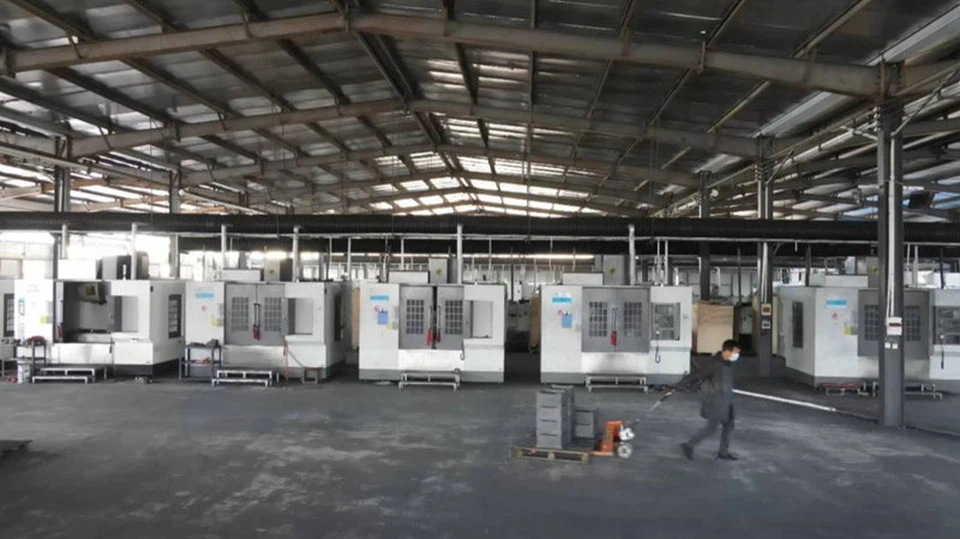
Henan Daking Import and Export Co., Ltd. (Henan Daking for short) is one of China's professional production, research and development, sales of graphite mold manufacturers. The company is committed to providing customers with high quality graphite raw materials and precision graphite products processing. The raw materials used by our company, such as isostatic pressed graphite, molded graphite and EDM graphite, have the characteristics of high strength, good thermal shock resistance, high temperature resistance, corrosion resistance and strong oxidation resistance.

FAQ
We're professional graphite tube manufacturers and suppliers in China, specialized in providing high quality customized service. We warmly welcome you to buy high-grade graphite tube made in China here from our factory.
High Purity Graphite Tube, Graphite Tube, Small Diameter Graphite Tube