Is carbon better than graphite
Leave a message
Products Description
Is carbon better than graphite?
This question cannot be answered with a simple "yes" or "no," because carbon is a vast family, and graphite is merely one member of that family.
The element carbon possesses numerous allotropes. Ranging from the hardest material-diamond-to lubricating graphite and electrically conductive carbon black, the differences in their properties stem from the varying ways carbon atoms are arranged.
Beyond these traditional forms, the carbon family includes novel members such as fullerenes, carbon nanotubes, and graphene. These materials exhibit remarkable properties in terms of electrical conductivity, thermal conductivity, and mechanical strength. Indeed, by manipulating carbon's microstructure, one can create materials with vastly different properties to meet specific needs.
Graphite is one of the most widely used members of the carbon family. Its unique layered structure endows it with a suite of excellent properties: it is a good electrical conductor, offers superb thermal conductivity in specific directions, and possesses self-lubricating qualities as well as outstanding chemical stability.
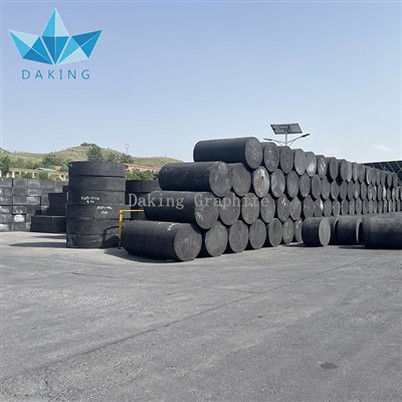
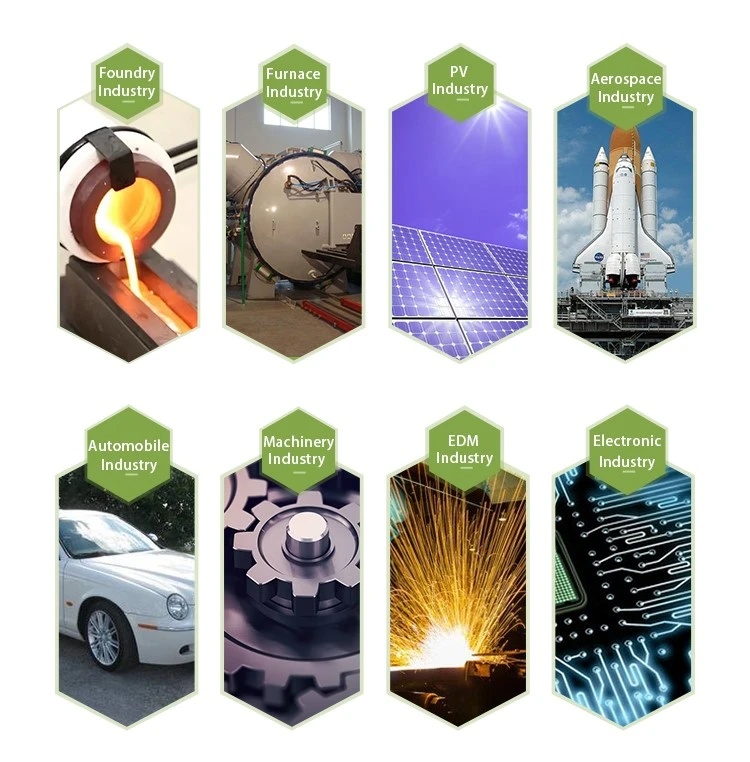
These characteristics have made graphite a cornerstone of industry. It is widely used to manufacture anodes for lithium-ion batteries, graphite sagger,high-temperature graphite crucibles, molds for metallurgical casting, sealing rings and bushings for mechanical seals, heating elements and connecting rods for vacuum furnaces, and graphite tubes for photovoltaic applications.
The core differences between the two are:
1. Tunability of properties:Carbon materials offer a vast range of properties that can be customized by designing their microstructure (such as the degree of graphitization). For example, activated carbon boasts a massive specific surface area, making it ideal for adsorption and catalysis, whereas carbon fiber is renowned for its high strength. While graphite's properties are excellent, they are relatively fixed.
2. Application specificity: This tunability allows carbon materials to excel in numerous cutting-edge fields. For instance, due to their superior performance, carbon/carbon composites outperform traditional graphite in high-temperature applications like Czochralski (CZ) silicon single-crystal growth; meanwhile, materials like carbon nanotubes shine in frontier sectors such as new energy and aerospace.
Therefore, there is no absolute better option-only the one that is most suitable. The choice of material depends entirely on the specific application scenario and performance requirements.

application industry
about us