What are graphite shafts good for
Leave a message
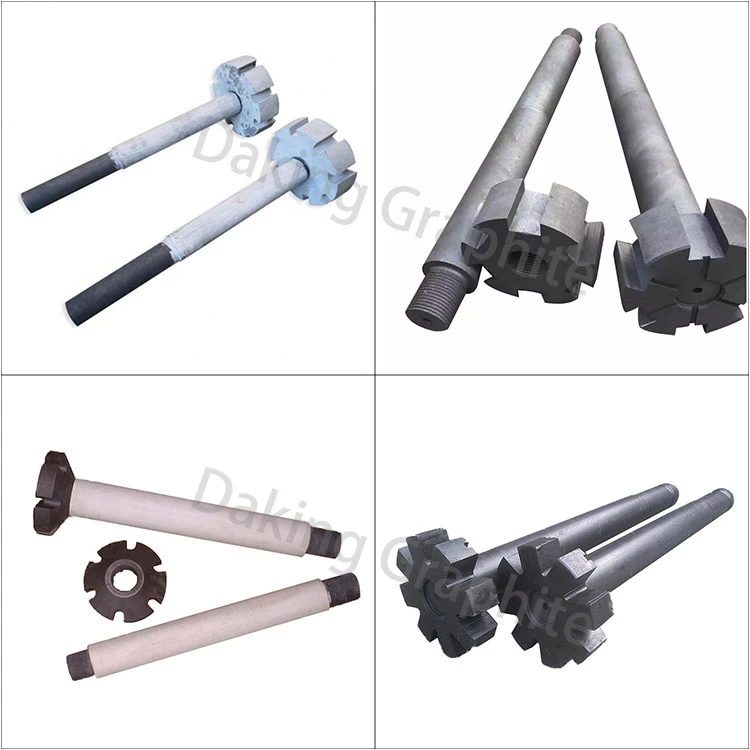
Isostatic Carbon Graphite Shafts: High-Performance Sealing and Transmission Solutions in Modern Industry
In modern industry, where efficiency and reliability are paramount, the performance of key components directly determines the overall performance of the equipment. Among these, isostatically pressed carbon graphite shafts, as advanced engineering materials, are increasingly becoming the preferred choice for demanding applications. So, what are their benefits? Why are they so popular?
What are isostatically pressed carbon graphite shafts?
To understand their benefits, we first need to understand their manufacturing process. Isostatic pressing is an advanced powder metallurgy forming technology. High-purity graphite powder or a carbon-graphite blend is filled into a flexible mold and then uniformly pressed from all sides by high-pressure liquid or gas. This uniform pressure from all sides results in highly uniform material density and structure. Finally, high-temperature sintering results in a carbon graphite shaft with superior performance.
Compared to traditional compression molding, isostatic pressing represents a significant improvement.
Four Core Advantages of Isostatically Pressed Carbon Graphite Shafts
1. Extremely High Structural Uniformity and Density
This is the most direct advantage of the isostatic pressing process. Due to the uniform forming pressure, the resulting graphite shaft is free of internal defects and density gradients, resulting in a highly homogeneous material structure. This means:
Consistent mechanical properties: All parts of the shaft have the same strength, hardness, and wear resistance, avoiding premature fracture or wear caused by local density variations.
Excellent stability: Under high-speed rotation and thermal shock, it is less likely to deform or eccentric, ensuring smooth operation and a long service life.
2. Excellent self-lubrication and wear resistance
Carbon graphite material itself has natural solid lubrication properties. During the friction process, it forms an extremely thin graphite transfer film on the surface of the wear part, significantly reducing the coefficient of friction.
Suitable for dry friction and harsh environments: Isostatically pressed carbon graphite shafts are the perfect solution for environments where liquid lubricants cannot be used (such as high temperatures, ultra-low temperatures, vacuum, or oil-free environments). Protects the mating parts: Not only is it inherently wear-resistant, it also effectively reduces wear on the mating metal sleeve or seal seat, extending the life of the entire friction pair.
3. Excellent Chemical and High-Temperature Resistance
High-purity, high-density isostatically pressed graphite shafts offer excellent chemical inertness, resisting corrosion from most acids, alkalis, organic solvents, and other chemical media. Furthermore, they maintain stable performance at temperatures exceeding 350°C (even reaching several thousand degrees Celsius in an inert environment) and cryogenic temperatures as low as -200°C, without aging, melting, or cracking like plastic or rubber.
4. Superior Mechanical Strength and Sealing Performance
The high density achieved through the isostatic pressing process directly translates into higher mechanical strength and flexural strength. This enables carbon graphite shafts to withstand greater loads and higher speeds. Furthermore, their uniform and dense microstructure makes them virtually impermeable, providing excellent air- and liquid-tightness when used as the sealing ring in mechanical seals or floating ring seals.
Leveraging these comprehensive advantages, isostatically pressed carbon graphite shafts are widely used in:
Pump mechanical seals: chemical process pumps, nuclear power plant main pumps, rocket fuel pumps, and more.
High-temperature fans and furnace machinery: As bearings or seals, they operate stably in high-temperature, oil-free environments.
Semiconductor and photovoltaic industries: Transmission and sealing in ultra-high-purity and vacuum environments such as single crystal furnaces and diffusion furnaces.
Food and pharmaceutical machinery: They meet the hygienic requirements of oil-free lubrication.
Automotive: Sealing rings in turbochargers, water pumps, and other applications.
In short, isostatically pressed carbon graphite shafts, through their unique molding process, maximize material properties, combining high density, high strength, self-lubrication, corrosion resistance, and high-temperature resistance. They are not only a key component for solving sealing and transmission challenges in extreme operating conditions, but also a core force driving the development of modern industrial equipment towards higher efficiency, greater reliability, and longer life. When facing demanding operating conditions, choosing isostatically pressed carbon graphite shafts is undoubtedly a wise and reliable decision.
About Us