What are the main uses of graphite bipolar plates?
Leave a message
Graphite material has now become one of the important materials used in the industrial field. Graphite materials are easy to process and can produce graphite products of any specifications that suit customer needs. In this article, I am going to talk about the application areas of graphite bipolar plates. What are the main uses of graphite bipolar plates? Let's look down!
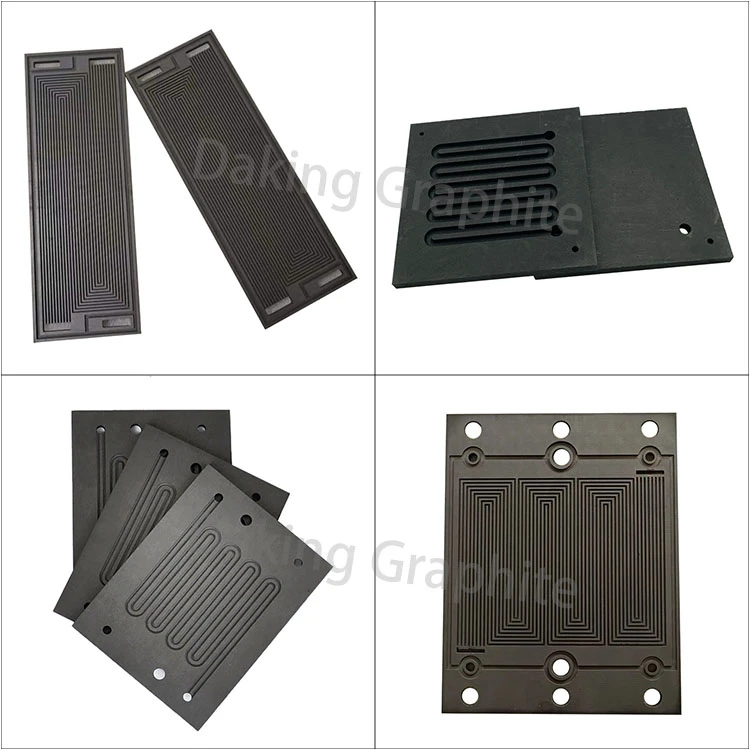
Graphite bipolar plates are an important component of proton exchange membrane (PEM) fuel cell systems. Bipolar plates play a key role in promoting the electrochemical reactions that generate electricity in fuel cells. Graphite bipolar plates offer several distinct advantages over other materials, including excellent electrical conductivity, lightweight and corrosion resistance. Let's take a closer look at the main uses of graphite bipolar plates in fuel cell systems:
1. Electrical conductivity: Graphite is a highly conductive material and is very suitable for use in bipolar plates. It has a low current resistance, which means it can efficiently conduct the charge generated by the fuel cell. This improves energy efficiency and produces more electricity using less fuel.
2. Light weight: Graphite's low density makes it an ideal material for bipolar plates. Lightweight bipolar plates can help fuel cells achieve higher energy density while reducing overall system weight. This is especially important for applications that require portable power or require a high power-to-weight ratio, such as electric vehicles.
3. Corrosion resistance: Graphite has excellent corrosion resistance. These properties make graphite bipolar plates ideal for use in PEM fuel cell systems because they are not affected by the harsh chemical reactions that occur in fuel cell stacks. This extends the life of the bipolar plates, increases system reliability and reduces maintenance costs.
4. Design flexibility: Graphite is a versatile material that can be easily shaped to meet various fuel cell system design requirements. The material's flexibility allows for the creation of complex bipolar plate designs that optimize the flow of reactants and electron currents within the fuel cell stack. This results in a more efficient and effective system.